Utterson–Enfield relationship
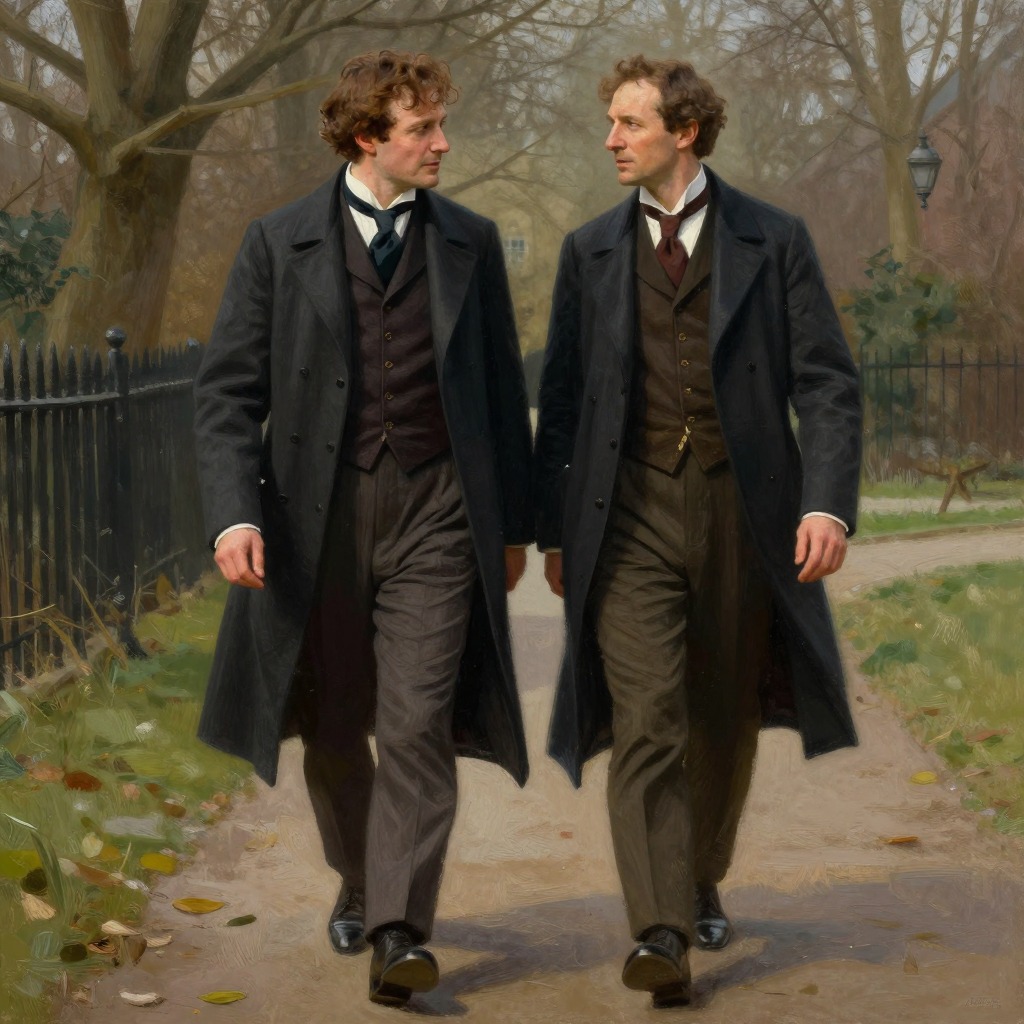
The relationship between Mr. Utterson and Mr. Richard Enfield is one of the story's foundational bonds, a friendship that appears improbable on the surface yet proves remarkably durable. They are distant kinsmen, and their connection is built not on shared interests or lively conversation but on a long, unspoken understanding. It was a puzzle to many observers what these two could see in each other, or what subject they could find in common; those who encountered them on their Sunday walks reported that they said nothing, looked singularly dull, and would hail with obvious relief the appearance of a friend. Yet for all that, the two men put the greatest store by these excursions, counting them the chief jewel of each week, and they set aside occasions of pleasure and even resisted the calls of business to enjoy them uninterrupted. This weekly ritual, a silent promenade through the streets of London, forms the quiet backbone of their association, a space where trust is exercised without the need for words.
The Story of the Door
The relationship's narrative significance is ignited during one of these rambles, when their path leads them down a by-street in a busy quarter of London. As they come abreast of a particular entry, Enfield lifts his cane and points to a sinister block of building with a blistered door. "Did you ever remark that door?" he asks, and when Utterson replies in the affirmative, Enfield adds, "It is connected in my mind with a very odd story." This moment transforms their walk from a routine of silence into the story's first revelation. Enfield proceeds to narrate the incident of a man trampling a child and then producing a cheque signed by a well-known and respected man to pay off the family. Utterson, listening intently, is deeply affected; he knows the signatory is his friend and client, Dr. Henry Jekyll. The tale has "gone home," and Utterson presses Enfield for the name of the man who walked over the child, learning it is "Hyde." Enfield, however, is reluctant to discuss the matter further, and the two make a bargain never to refer to it again, shaking hands on the pact. This agreement, born from a shared sense of the story's ugliness, cements their mutual discretion and sets the stage for Utterson's private investigation.
A Bond of Discretion and Mutual Respect
The relationship is characterized by a profound respect for each other's boundaries and a shared code of silence. Enfield articulates this code when he explains his rule: "the more it looks like Queer Street, the less I ask." Utterson, a man of similar temperament, approves of this rule, calling it "a very good rule, too." Their interaction is marked by a dry, understated humor and a mutual understanding that does not require elaboration. When Utterson, after hearing the story, asks Enfield if he is sure Hyde used a key, Enfield is surprised, but Utterson explains that he knows the name of the other party already. Enfield, feeling he has been drawn into a confidence he did not intend, shows a touch of sullenness but confirms his account was "pedantically exact." The lawyer sighs deeply but says never a word, and the young man, ashamed of his "long tongue," proposes their bargain of silence. Utterson agrees with all his heart, and they shake hands. This exchange reveals the delicate balance of their friendship: Enfield provides the initial, crucial piece of evidence, and Utterson, respecting his kinsman's discomfort, accepts the information without further probing, honoring their pact.
Narrative Role and Significance
Enfield functions as the catalyst for the entire mystery, the first character to encounter Hyde and to bring his existence to Utterson's attention. His role is largely confined to the opening chapter and a later, brief reappearance, but his impact is decisive. He is the source of the story's first description of Hyde—a man who gives a "strong feeling of deformity" and is impossible to describe, yet instantly detestable. This initial portrait, filtered through Enfield's visceral disgust, plants the seed of Utterson's obsessive curiosity. Later, in Chapter 7, Enfield accompanies Utterson on another Sunday walk that again passes the by-street. He remarks that the story is at an end, as they will never see more of Mr. Hyde. Utterson then reveals that he once saw Hyde and shared Enfield's repulsion. Enfield, in turn, admits he has since discovered that the door is a back way to Dr. Jekyll's. They step into the court and see Jekyll at a window, but a sudden expression of abject terror on the doctor's face freezes them both. They leave in silence, pale, with an answering horror in their eyes. Utterson murmurs, "God forgive us, God forgive us," and Enfield only nods his head very seriously and walks on. This scene underscores their shared, wordless comprehension of the horror they have witnessed, a final, silent communion that confirms the depth of their bond even as it confronts the limits of what their friendship can contain.